Is The 787 Dreamliner Still Boeing’s Most Important Jet?
Published on August 06, 2025
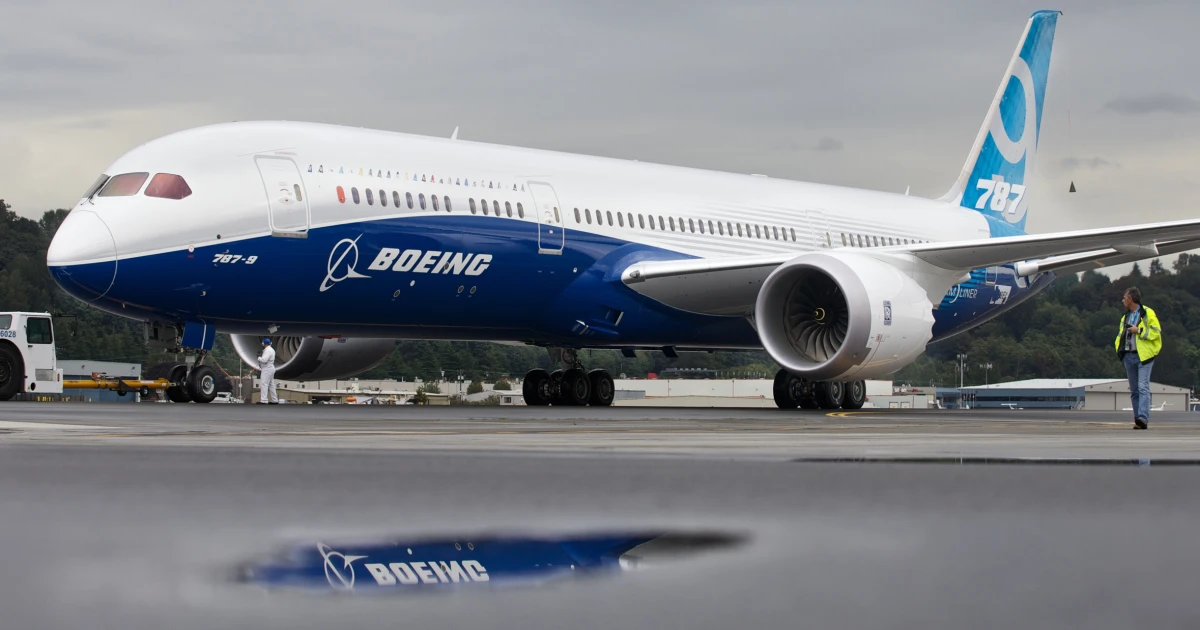
The Boeing 787 Dreamliner is a very popular Boeing jet among both passengers and airlines. But is the Boeing 787 Dreamliner still the most important jet in Boeing’s portfolio? That question holds more weight than ever as the aerospace giant navigates through certification delays, safety scrutiny, and shifting market demands, especially with their other planes. Understanding the Dreamliner’s current role helps illuminate the broader state of Boeing's commercial strategy and its competitive position against Airbus, particularly in the long-haul segment.
When it debuted in 2011, the 787 Dreamliner was hailed as a game-changer: the first commercial aircraft with a fuselage made largely from carbon composites. With three variants (787-8, 787-9, and 787-10), the aircraft demonstrated long-range capabilities, 25% fuel efficiency improvements over older widebodies, and a smoother, more comfortable passenger experience. This article will explore whether the Dreamliner continues to be the flagship of Boeing’s lineup amid rising competition and internal development challenges. So, what is the short answer?
Boeing 787 Is Indeed The Most Important Jet For Boeing So Far
Boeing Company B-787 Dreamliner departing out of Moscow Vnukovo International airportPhoto: vaalaa | Shutterstock
In short, the 787 Dreamliner remains Boeing’s most important widebody aircraft, and arguably its most strategically vital program overall. According to Boeing, it’s their best-selling widebody aircraft. With more than a thousand aircraft delivered and a healthy backlog still pending, the Dreamliner contributes significantly to Boeing's commercial aircraft revenues. Its combination of fuel efficiency, operational flexibility, and long-range capabilities keeps it central to airline strategies worldwide.
Despite recent negative headlines, including the June 2025 Air India crash involving this aircraft type, the 787 program continues to be a cornerstone of Boeing's product offering. In 2025, Boeing ramped up 787 production to seven aircraft per month, a clear signal of strong and sustained demand. As of mid-2025, Boeing has delivered over 1,140 Dreamliners, with approximately 780 to 790 orders still in the backlog.
All these numbers place the Dreamliner as the most successful widebody in Boeing’s history by deliveries. The 787 family has surpassed one billion passengers flown since its introduction, logging more than 30 million flight hours across five million commercial flights across all continents, including the Antarctic, when a Norse 787 landed at Troll Airfield in 2023, and then again in 2024, as reported by FlightRadar24 and Airways Magazine. The aircraft's strong global presence and reliability hold its position as Boeing's most impactful commercial aircraft to date.
What Factors Influence Its Importance And Popularity?
Boeing 787 Dreamliner familyPhoto: Boeing
Several critical factors can explain why the 787 remains a linchpin in Boeing’s commercial aviation strategy. These include the aircraft’s large order backlog, production ramp-up efforts, international route flexibility, and its comparative position within Boeing's lineup. Each of these aspects reinforces the Dreamliner's ongoing significance despite new programs on the horizon, including the long-awaited Boeing 777X.
The 787 program currently holds close to 1,950 total orders across its variants, with roughly 1,140 to 1,160 delivered as of July 2025. Its backlog with nearly 800 aircraft is the largest among Boeing's widebody jets. Production has recovered from regulatory halts and quality inspections that initially hit the 787 program after several incidents involving batteries, and later some other issues related to outsourcing. Now Boeing is rolling out seven Dreamliners per month from its South Carolina facility, but the company is planning to increase this number to 10 in 2026, as per the Wall Street Journal.
The Dreamliner also plays a crucial role in supporting point-to-point long-haul travel. It allows airlines to bypass traditional hub-and-spoke models, opening up new nonstop routes between secondary cities. For Boeing, this unlocks opportunities that were previously dominated by larger and less efficient aircraft like the Boeing 777-300ER. You can read about some of the most popular international routes operated by Boeing 787 in one of our previous articles.
Expert, Airlines, And Travelers' Opinions
Two United Airlines aircraft, one on a taxiway and another about to land on a runway.Photo: Vincenzo Pace I Simple Flying
Industry analysts and airline executives continue to emphasize the centrality of the Dreamliner in Boeing's future. Aviation consultants often refer to the 787 as Boeing's flagship widebody, noting its impeccable track record in delivering operational savings to carriers. Despite recent safety concerns, the consensus remains that the Dreamliner offers the best balance of range, capacity, and economics.
United Airlines doubled down on the 787 in 2023 with a firm order for 50 additional aircraft, bringing their total commitment to 150, according to Boeing, which is the largest of any US carrier. As of July 2025, United operates 78 Dreamliners, according to planespotters.net. All Nippon Airways(ANA) from Japan, the launch customer, continues to operate the world’s largest 787 fleet, with 84 aircraft in service. This demonstrates strong confidence from legacy airlines that rely on long-haul routes to maintain profitability.
Passenger reviews from platforms like Reddit, airliners.net trip reports, and FlyerTalk frequently praise the Dreamliner for its superior in-flight experience. Flyers often cite quieter cabins, larger windows, less turbulence felt on board, and higher humidity levels as standout features. One FlyerTalk user shared, “I feel better coming off a 787 than any other Boeing or Airbus but there are many other factors that probably have a greater impact. I do notice my sinuses and skin are less dry when coming off a Dreamliner.”
Another frequent comment among travelers relates to turbulence management. The 787’s advanced sensors and wing design make for a smoother ride, something frequent flyers notice. Several users on the r/aviation subreddit noted that the Dreamliner seems to handle turbulence better, and overall, the flights feel more stable even in rough air. This perception has become a selling point for airlines promoting the Dreamliner on premium routes.
How Does the 787 Compare To Other Boeing Jets?
American Airlines Boeing 737 and United Airlines Boeing 787 at San Francisco International Airport SFOPhoto: Sundry Photography | Shutterstock
The Boeing 737 MAX series may rival the 787 in overall volume, but it serves a different purpose in Boeing’s portfolio. The MAX is a narrowbody aircraft geared for short- and medium-haul routes, while the 787 excels in long-haul, intercontinental operations. In strategic terms, the Dreamliner offers greater long-term value, especially in premium markets.
According to Reuters, Boeing delivered more 737 MAX aircraft in the first half of 2025 (206 units), but the program is hampered by regulatory scrutiny and production caps following past safety concerns. In contrast, the 787 enjoys relative regulatory stability and broad airline usage for international service. The newest Boeing jet, 777-9, while potentially a future flagship, remains uncertified and won’t enter service until at least 2026.
Boeing’s Key Values Comparison
Aircraft
Sales/Deliveries
Role
Status
737 MAX
1,886 total deliveries, with approx. 200 delivered in H1 2025
High-volume narrowbody
Facing FAA caps
777-9
0 delivered yet
Future long-haul flagship
Certification delayed
787 Dreamliner
1,140 total deliveries, with approx. 40 deliveries H1 in 2025
Active widebody backbone
Producing at 7/month
This leaves the Dreamliner as Boeing’s only widebody delivering at volume today. It occupies a unique position between the higher-capacity 777 and the shorter-range MAX, offering some flexibility that companies in certain regions, such as Asia, appreciate. For instance, in Asia, the Boeing 787 is utilized on shorter routes, like Seoul-Tokyo, which can also be covered by a 737. The Dreamliner is not just Boeing’s present; it is still its future.
Some Challenges That 787 Faces
Air India Boeing 787Photo: Yatrik Sheth | Shutterstock
Despite its strengths, the 787 is not without challenges. The June 2025 crash involving an Air India 787-8 marked the first fatal incident and a full-hull loss in the aircraft’s operational history. While investigations are ongoing, such events naturally raise concerns among regulators, operators, and especially passengers.
The National Transportation Safety Board (NTSB) and India’s DGCA are expected to release preliminary findings by late 2025, and Boeing's reputation may hang in the balance. A history of quality control issues, including improperly fastened fuselage sections and cabin pressure anomalies, has also dented confidence in Boeing’s manufacturing oversight. Although these issues have mainly been addressed and resolved, their legacy due to negative media coverage persists.
Travelers and industry stakeholders should watch closely as investigations progress. Should regulators uncover systemic flaws, airlines could reassess their future 787 deliveries. For now, no widespread groundings are expected, but reputational risks remain. You can always check our Simple Flying website to find the latest updates related to the Boeing 787.
Final Thoughts
EVA AIR 787-9
Photo: Melv_L - Macasr | Wikimedia Commons
In the big picture, the Boeing 787 Dreamliner remains the company’s most important jet. It leads Boeing's commercial aircraft lineup in widebody deliveries, global reach, and operational impact. Even with other programs in development or facing delays, the 787 holds the mantle as Boeing’s cornerstone for long-haul operations.
The Dreamliner has opened new international routes and also helped modernize airline fleets with better fuel efficiency and passenger comfort. Despite a few operational setbacks, it continues to dominate in a segment where Airbus offers less competition. For Boeing, the 787 is not just a simple plane; it’s a winning strategy.
Looking ahead, Boeing’s ability to maintain and expand 787 production while managing safety perceptions will determine its long-term influence. As new entrants like the Airbus A350-1000 attempt to compete, the Dreamliner must continue evolving. For now, it remains Boeing's most vital jet and the backbone of many global fleets. And, most importantly, it is loved by many passengers around the world!
When it debuted in 2011, the 787 Dreamliner was hailed as a game-changer: the first commercial aircraft with a fuselage made largely from carbon composites. With three variants (787-8, 787-9, and 787-10), the aircraft demonstrated long-range capabilities, 25% fuel efficiency improvements over older widebodies, and a smoother, more comfortable passenger experience. This article will explore whether the Dreamliner continues to be the flagship of Boeing’s lineup amid rising competition and internal development challenges. So, what is the short answer?
Boeing 787 Is Indeed The Most Important Jet For Boeing So Far
Boeing Company B-787 Dreamliner departing out of Moscow Vnukovo International airportPhoto: vaalaa | Shutterstock
In short, the 787 Dreamliner remains Boeing’s most important widebody aircraft, and arguably its most strategically vital program overall. According to Boeing, it’s their best-selling widebody aircraft. With more than a thousand aircraft delivered and a healthy backlog still pending, the Dreamliner contributes significantly to Boeing's commercial aircraft revenues. Its combination of fuel efficiency, operational flexibility, and long-range capabilities keeps it central to airline strategies worldwide.
Despite recent negative headlines, including the June 2025 Air India crash involving this aircraft type, the 787 program continues to be a cornerstone of Boeing's product offering. In 2025, Boeing ramped up 787 production to seven aircraft per month, a clear signal of strong and sustained demand. As of mid-2025, Boeing has delivered over 1,140 Dreamliners, with approximately 780 to 790 orders still in the backlog.
All these numbers place the Dreamliner as the most successful widebody in Boeing’s history by deliveries. The 787 family has surpassed one billion passengers flown since its introduction, logging more than 30 million flight hours across five million commercial flights across all continents, including the Antarctic, when a Norse 787 landed at Troll Airfield in 2023, and then again in 2024, as reported by FlightRadar24 and Airways Magazine. The aircraft's strong global presence and reliability hold its position as Boeing's most impactful commercial aircraft to date.
What Factors Influence Its Importance And Popularity?
Boeing 787 Dreamliner familyPhoto: Boeing
Several critical factors can explain why the 787 remains a linchpin in Boeing’s commercial aviation strategy. These include the aircraft’s large order backlog, production ramp-up efforts, international route flexibility, and its comparative position within Boeing's lineup. Each of these aspects reinforces the Dreamliner's ongoing significance despite new programs on the horizon, including the long-awaited Boeing 777X.
The 787 program currently holds close to 1,950 total orders across its variants, with roughly 1,140 to 1,160 delivered as of July 2025. Its backlog with nearly 800 aircraft is the largest among Boeing's widebody jets. Production has recovered from regulatory halts and quality inspections that initially hit the 787 program after several incidents involving batteries, and later some other issues related to outsourcing. Now Boeing is rolling out seven Dreamliners per month from its South Carolina facility, but the company is planning to increase this number to 10 in 2026, as per the Wall Street Journal.
The Dreamliner also plays a crucial role in supporting point-to-point long-haul travel. It allows airlines to bypass traditional hub-and-spoke models, opening up new nonstop routes between secondary cities. For Boeing, this unlocks opportunities that were previously dominated by larger and less efficient aircraft like the Boeing 777-300ER. You can read about some of the most popular international routes operated by Boeing 787 in one of our previous articles.
Expert, Airlines, And Travelers' Opinions
Two United Airlines aircraft, one on a taxiway and another about to land on a runway.Photo: Vincenzo Pace I Simple Flying
Industry analysts and airline executives continue to emphasize the centrality of the Dreamliner in Boeing's future. Aviation consultants often refer to the 787 as Boeing's flagship widebody, noting its impeccable track record in delivering operational savings to carriers. Despite recent safety concerns, the consensus remains that the Dreamliner offers the best balance of range, capacity, and economics.
United Airlines doubled down on the 787 in 2023 with a firm order for 50 additional aircraft, bringing their total commitment to 150, according to Boeing, which is the largest of any US carrier. As of July 2025, United operates 78 Dreamliners, according to planespotters.net. All Nippon Airways(ANA) from Japan, the launch customer, continues to operate the world’s largest 787 fleet, with 84 aircraft in service. This demonstrates strong confidence from legacy airlines that rely on long-haul routes to maintain profitability.
Passenger reviews from platforms like Reddit, airliners.net trip reports, and FlyerTalk frequently praise the Dreamliner for its superior in-flight experience. Flyers often cite quieter cabins, larger windows, less turbulence felt on board, and higher humidity levels as standout features. One FlyerTalk user shared, “I feel better coming off a 787 than any other Boeing or Airbus but there are many other factors that probably have a greater impact. I do notice my sinuses and skin are less dry when coming off a Dreamliner.”
Another frequent comment among travelers relates to turbulence management. The 787’s advanced sensors and wing design make for a smoother ride, something frequent flyers notice. Several users on the r/aviation subreddit noted that the Dreamliner seems to handle turbulence better, and overall, the flights feel more stable even in rough air. This perception has become a selling point for airlines promoting the Dreamliner on premium routes.
How Does the 787 Compare To Other Boeing Jets?
American Airlines Boeing 737 and United Airlines Boeing 787 at San Francisco International Airport SFOPhoto: Sundry Photography | Shutterstock
The Boeing 737 MAX series may rival the 787 in overall volume, but it serves a different purpose in Boeing’s portfolio. The MAX is a narrowbody aircraft geared for short- and medium-haul routes, while the 787 excels in long-haul, intercontinental operations. In strategic terms, the Dreamliner offers greater long-term value, especially in premium markets.
According to Reuters, Boeing delivered more 737 MAX aircraft in the first half of 2025 (206 units), but the program is hampered by regulatory scrutiny and production caps following past safety concerns. In contrast, the 787 enjoys relative regulatory stability and broad airline usage for international service. The newest Boeing jet, 777-9, while potentially a future flagship, remains uncertified and won’t enter service until at least 2026.
Boeing’s Key Values Comparison
Aircraft
Sales/Deliveries
Role
Status
737 MAX
1,886 total deliveries, with approx. 200 delivered in H1 2025
High-volume narrowbody
Facing FAA caps
777-9
0 delivered yet
Future long-haul flagship
Certification delayed
787 Dreamliner
1,140 total deliveries, with approx. 40 deliveries H1 in 2025
Active widebody backbone
Producing at 7/month
This leaves the Dreamliner as Boeing’s only widebody delivering at volume today. It occupies a unique position between the higher-capacity 777 and the shorter-range MAX, offering some flexibility that companies in certain regions, such as Asia, appreciate. For instance, in Asia, the Boeing 787 is utilized on shorter routes, like Seoul-Tokyo, which can also be covered by a 737. The Dreamliner is not just Boeing’s present; it is still its future.
Some Challenges That 787 Faces
Air India Boeing 787Photo: Yatrik Sheth | Shutterstock
Despite its strengths, the 787 is not without challenges. The June 2025 crash involving an Air India 787-8 marked the first fatal incident and a full-hull loss in the aircraft’s operational history. While investigations are ongoing, such events naturally raise concerns among regulators, operators, and especially passengers.
The National Transportation Safety Board (NTSB) and India’s DGCA are expected to release preliminary findings by late 2025, and Boeing's reputation may hang in the balance. A history of quality control issues, including improperly fastened fuselage sections and cabin pressure anomalies, has also dented confidence in Boeing’s manufacturing oversight. Although these issues have mainly been addressed and resolved, their legacy due to negative media coverage persists.
Travelers and industry stakeholders should watch closely as investigations progress. Should regulators uncover systemic flaws, airlines could reassess their future 787 deliveries. For now, no widespread groundings are expected, but reputational risks remain. You can always check our Simple Flying website to find the latest updates related to the Boeing 787.
Final Thoughts
EVA AIR 787-9
Photo: Melv_L - Macasr | Wikimedia Commons
In the big picture, the Boeing 787 Dreamliner remains the company’s most important jet. It leads Boeing's commercial aircraft lineup in widebody deliveries, global reach, and operational impact. Even with other programs in development or facing delays, the 787 holds the mantle as Boeing’s cornerstone for long-haul operations.
The Dreamliner has opened new international routes and also helped modernize airline fleets with better fuel efficiency and passenger comfort. Despite a few operational setbacks, it continues to dominate in a segment where Airbus offers less competition. For Boeing, the 787 is not just a simple plane; it’s a winning strategy.
Looking ahead, Boeing’s ability to maintain and expand 787 production while managing safety perceptions will determine its long-term influence. As new entrants like the Airbus A350-1000 attempt to compete, the Dreamliner must continue evolving. For now, it remains Boeing's most vital jet and the backbone of many global fleets. And, most importantly, it is loved by many passengers around the world!